Have you or anyone you known utilized public unemployment assistance? How would you describe the experience? What parts would you or they label as helpful, pleasant, or effective? What parts were burdensome or ineffective?
Further exposing my naivety, I have no intimate interaction with our unemployment system in the last 5 years and only minimal exposure prior to 2008. I concluded my next best options were to become as informed as possible on the process (Unemployment Assistance Part III) and to read stories of individuals who had or are unemployed (Gawker).
What I learned was both our current public unemployment system as well as the underlying conditions for individuals becoming and/or staying unemployed are extremely complex.
My next stop before proposing modifications to public assistance programs is to understand the pros and cons of the current system.
Before outlining pros and cons, however, I believe everyone must first answer the following difficult questions:
- What defines success?
- Or, what does success look like?
- How is success measured?
- What is a good outcome?
- What is a bad outcome?
- Where is unemployment insurance (UI) succeeding? Where is it failing?
Please refer to Unemployment Assistance Part II: Roles and Goals for my responses to questions 1-4 and to today's and future blog posts for question 5.
Pros/Cons of current system
Pros -
- Immediate support/assistance is available when you need it.
- In the absence of public unemployment assistance, there is no guarantee individuals, friends/family, private charities, or local governments will have funding to sponsor individuals in need.
- Assumption: Private safety nets (private insurance, friends/family, private charities) are inadequate.
- Reduced stress (emotional, financial) following loss of job.
- Government serves as lender of last resort. Thus providing the guarantee of available assistance. This guarantee lessens the already high stress of losing employment with knowing there will be funding available for necessities.
- Lessen economic decline of general economy.
- Questionable. Cited by some proponents of unemployment system, but I remain highly skeptical this is true.
- Prolongs readjustment or adaptation by industries and companies preventing transfer of resources and personnel to growing fields, the exact solution to the problem of unemployment.
- Also seems to kick the can down the road. Can you really spend your way out of a recession? Does it not in the end prolong it, thereby making the correction worse (longer and greater) in the future?
- Supporters of this advantage would state how a group of people losing their job would decrease overall spending/demand causing an additional group of people to lose their job which would further decrease spending/demand and spiral out of control.
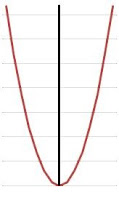
- I agree in part, however I see two roads:
- 1) A steeper, "more severe", and short-lived correction with a subsequent steeper and quicker rebound.
- 2) A gradual, "less severe", and long-lived correction with a subsequent gradual and prolonged rebound.
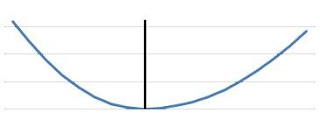
- Which road is better? To each his own, but as mentioned in my biography, inefficiencies are unacceptable in my personal framework. Therefore the transfer of resources from efficient entities to less efficient entities greatly disturbs me. Thus I would opt for road #1.
Cons -
- Increased taxes.
- Program must be paid for some how. If you haven't figured it out yet, taxes will be levied to operate public unemployment assistance.
- Raises cost of hiring per CATO Institute.
- More difficult to create jobs.
- The exact thing that would solve the problem.
- Currently, employers are penalized for laying off workers. Thus businesses are less willing to take the risk of hiring new employees for fear they will be penalized if business slows and they need to let people go.
- Combined with increased hiring costs and requirements, this acts as a detriment to new hiring.
- Without the UI system, "employers offering seasonal employment would have to pay higher wages in order to compete against employers who offer year-round employment. Unemployment benefits undercut this natural market phenomenon and act as a subsidy to employers whose need for labor is cyclical or seasonal.” (Conerly - NCPA)
- Yet again, additional solutions of increased year round employment or higher seasonal wages, are hamstrung by our current unemployment system.
- "In sum, the UI system distorts pay structures and company employment decisions, while generating differential subsidies and burdens on industries." (CATO Institute)
- Less incentive to find new work.
- Questionable, but does have some validity based on the following study and graphs:
- Increased dependence on government rather than individual, friends/family and community.
- Some would say this would be good, but I believe it undermines the usefulness of a relational component in assisting those in need (Tragedy of American Compassion).
- Diminishes the generosity of those able to help, and dissolves the connection of those receiving to directly realizing their assistance is coming from another person(s).
- Disincentive for savings.
- Another solution that the UI system undermines.
- Don’t need to plan for the unexpected as the government has your back.
- Waste, fraud, and abuse of productive taxpayer earnings.
- Favors certain workers more than others.
- Seasonal workers and workers in sectors with a historically higher rate of unemployment will likely receive more frequent benefits than those with steady employment.
- As mentioned previously, prolongs readjustment or adaptation by industries and companies preventing transfer of resources and personnel to growing fields, the exact solution to the problem.
Admittedly, detailing the pros and cons of our current unemployment system is a difficult and sensitive topic to write about, greatly compounded by my naivety. Unsurprisingly, as I am writing a blog series on redeeming the unemployment system, I found more cons than pros of our current UI program. However, as stated in previous posts, I am by no means against public assistance, I simply want to improve the effectiveness and efficiency of where and how all our collective taxes are allocated and utilized. While the current UI program accomplishes some good, I believe many, if not all, of the pros of our current UI program may be retained and most of the cons may be eliminated by a handful of changes to be detailed in future posts.
Next Post Topic: Sabbatical
 SMART Goals. Specific, measurable, attainable, relevant, time bound. I love setting goals and am a supporter of using the SMART model of goal setting. 2013 is my third year of gardening. I believe I am turning the corner of becoming a successful gardener. I had no goals in 2011, one goal: preventing deer from eating my garden, in 2012, and have established the following as my goals for 2013, 2014, and beyond:


