Showing posts with label Welfare Systems. Show all posts

Thursday, May 7, 2015

Long Term Disability Part II: The Golden Circle


Simon Sinek concluded the most successful entities first and foremost answer and promote why they exist before moving to how they will accomplish their vision and what specific actions they will undertake. Per Sinek, the standard line is to start on the outside with what does one do, proceed to how to do it, and then leaving why one does it fuzzy. Unfortunately, consumers are most interested in why an entity does what they do. This is especially true as access to information, services, and goods are at an all time high. Sinek posits entities would benefit by starting in the middle of the circle by answering why they do what they do and then moving outwards to how and what.

Where Simon’s counsel, my blog, and long term disability assistance meet, is discussing the role of long term disability assistance. Put another way, why should we have long term disability assistance?


Disclaimers:
  1. Please refer to general Disclaimers page.
  2. I have no close relationship with anyone receiving long term disability. I have spoken with a small number on disability and those seeking disability through interactions at my work and through community organizations. Never-the-less, I do confess naivety and imperfect knowledge.
  3. Public assistance programs are complicated and I do not purport to be able to construct a perfect system where everyone that needs long term disability insurance receives the perfect amount of assistance and everyone that does not need assistance does not receive it and where funds are collected in a fair and just manner.

Defining the role of long term disability assistance is part two of an anticipated six part series. Please see Part I for an initial introduction. I will start with the listed roles and goals of Supplemental Security Income (SSI) and Social Security Disability Insurance (SSDI) and end with my personal thoughts on what the roles and goals of a public funded disability system should encompass.


Supplemental Security Income:

Purpose: The basic purpose of SSI is to assure a minimum level of income to people who are aged, blind, or disabled and who have limited income and resources. (Social Security Handbook)

Goals:
  • It is designed to help aged, blind, and disabled people, who have little or no income; and
  • It provides cash to meet basic needs for food, clothing, and shelter.


Social Security Disability Insurance:

General purposes of social security (includes OASI, a.k.a. retirement aspect of Social Security):
  • To provide for the material needs of individuals and families;
  • To protect aged and disabled persons against the expenses of illnesses that may otherwise use up their savings;
  • To keep families together; and 
  • To give children the chance to grow up healthy and secure.


My thoughts:

General Purpose: Promote value and dignity through generous physical, emotional, social, spiritual, and financial support where those with long term disabilities are empowered to thrive as a valued member of society.

Specifically, I support:
  • Greater local influence
  • Those in need receiving generous support (financially, emotionally, socially, spiritually, physically)
  • Empowering those with disabilities to not only survive, but thrive
  • Providing those with long term disabilities avenues to gain dignity
    • I believe all people have been created in the image and likeness of God (see disclaimers). We have been graced inherent value regardless of our perceived abilities to contribute to society.
  • Personal relationships and integrating those with disabilities into society
    • Loneliness I fear is widespread throughout all communities, but especially those who live with disabilities.
  • Sustainability

In contrast, I am against:
  • Impersonal handouts
  • Loss of dignity
  • One size fits all
    • One person’s disability will require a different set of resources than another. Money and time are tools that can produce constructive or destructive consequences. How they are used determines the degree of benefit or harm.
  • Enabling/incentivizing individuals to aspire receiving disability assistance 
  • Foolish allocation of resources
    • There are more needs than our limited resources can meet. Many would support improved education, roads, safety, lower taxes, etc. However, to increase the support of one often requires decreasing the support of another. We need to be wise in determining how we allocate our limited resources.
  • Dependency on a government system 
    • As stated previously, I support national disability assistance is quinary safety net
  • Segregation between those with and without disabilities
  • Pity
    •  All people have inherent value (see above) and while empathy should be extended, a system solely built on giving out of pity rather than giving out of generous motives will likely be harmful for both the giver and receiver.


Inspirational statements and visions form the necessary foundation to build public assistance programs. However, even with a solid foundation, poor logistics and implementation can be a cause of failure. With a solid foundation of why disability assistance matters, I will transition into looking at the nuts and bolts of our current long term disability system and eventually in part six propose changes.

Next post topic: Disability Part III: Current Programs

Thursday, March 5, 2015

Long Term Disability Part I: Champs or Chumps?

"What should we, as a country, do for people who aren't making it? Americans want to be generous. But Americans don't want to be chumps."

- Chana Joffe-Walt - NPR

America provides long term disability assistance through two programs, Social Security Disability Insurance (SSDI) and Supplemental Security Income (SSI).

As highlighted in Forbes magazine and National Public Radio, increasingly more debate and discussion is revolving around America’s disability system. SSDI is projected to become insolvent in 2016 and current proposals are on the table to pull money from Social Security retirement funding, a passionate topic for many. Furthermore, there has been an increase in the usage of both SSDI and SSI prompting review of the effectiveness and efficiency of America’s long term disability system. Secondary to these trends, I anticipate disability assistance will receive additional attention in the media and everyday conversations.

As with most public assistance programs, disability assistance is very complex. This is especially true in an aging and growing population coupled with periods of strong and weak economies. Due to the complexity, I will write a series of blog posts detailing various components of America’s disability system including:
  1. Overview – Utilization and Costs
    • How extensive is disability in America?
  2. For and Against
    • What do I see as the roles and goals of public funded disability assistance?
  3. Current Programs (SSDI and SSI)
    • What is currently being done for those with disabilities?
  4. Cited Effects
    • What effects do others believe public disability assistance produces?
  5. Validity of Cited Effects
    • What cited effects hold up under closer scrutiny?
  6. Proposed Changes
    • What changes, if any, would I propose to America’s disability system?

Detailed below is a snapshot of disability in America. Unfortunately whenever data is presented biases are at work. That being said, I have attempted to simply present facts and avoid coloring the statistics with my personal interpretations. In future blog posts I will outline details such as how current programs define and determine if an individual is disabled and include my own analysis and interpretations of available data.

Data has been broken down to include total usage of both Social Security Disability Insurance (SSDI) and Supplemental Security Income (SSI) as well as individually. Please refer to titles and captions of graphs below for additional details.

Total Recipients:

~30% receive both SSDI and SSI


Only SSI provides benefits to parents who have children (0-17 years old) with disabilities. SSDI has a category of adult children, however this represents individuals > 18 years old who acquired a disability while a child.


Total Benefits Paid: (administrative fees not included; 2014 CPI adjusted where noted)
SSID benefits have increased in total dollars (both unadjusted and CPI adjusted) and % of Gross Domestic Product (GDP). The percent of total benefits to GDP has increased much less in SSI than SSDI. Click link below for expandable graphs of SSI and SSDI benefts.


CPI adjusted dollars per working person (red line on right vertical axis) shows the amount each working person funds long term disability assistance. In 2012, 76% of the population was considered working population. The other 24% includes children, elderly, and disabled who do not have earned income.


Graph above shows the CPI adjusted average benefit recipients receive and how this compares to the median household income (red line on vertical axis to the right). In general, SSDI average benefits are twice as much as SSI average benefits. I combined them as it gets complicated when factoring in ~30% of recipients receive both SSDI and SSI benefits.


Annual applications and percent approved for benefits:


General reason for receiving benefits: (all current beneficiaries and last year approvals)


Both the left and right vertical axis show diagnosis of only new applicants each year.


References:
SSI 2014 Annual Report
SSDI 2013 Annual Report
Census.gov


Many questions arise from the data above. Why the steady increase in recipients? Should we be concerned with the growing number of children on disability? Why the change in reasons recipients receive assistance? Is the trend from an aging and growing population? More women in the workforce? Greater awareness to those in need there is help available? Waste, fraud and abuse?

With an increasing amount of money being received by a greater number of individuals, are we champions in meeting the complex needs of our citizens or are we chumps in allowing waste, fraud, and abuse of taxpayer money?

Next post I will outline my thoughts on the roles and goals a disability assistance system should meet. I challenge you to contemplate what you see as the role of public funded disability assistance. In addition, based on your defined role, what aspects of disability benefits you are for and against.


Next Post Topic: Disability Part II: Roles and Goals

Thursday, December 4, 2014

Minimum Wage Part VII: Powerball

Powerball Drawing Machine
Odds to win the Powerball: 
1 in 175,223,510 
(1.75 x 10⁸)

Odds to pick the ideal combination of public assistance programs among 126 federally funded programs: 

1 in 85,070,591,730,234,600,000,000,000,000,000,000,000 
(8.50 x 1037)

Disclaimer:
Unlike the Powerball where one either wins or loses, there are many combinations of antipoverty programs that may produce results close to the ideal (normal distribution). While the Powerball analogy is imperfect, I hope it highlights the problem of choosing which combination to implement.

Michael Tanner cites 126 federal public assistance programs received $668 billion in 2011. Individual states spent an additional $284 billion dollars funding public assistance programs.

Updated spending from fiscal year 2014 estimates >$1400 billion were spent by the federal government on public assistance programs.
  • Includes Social Security and Medicare
  • Estimated $880 billion was spent on public assistance excluding Social Security and Medicare
  • Source: Christopher Chantrill at usgovernmentspending.com

As detailed previously, I believe current poverty alleviation efforts, including minimum wage, are failing. See:

To preface, I hold the following assumptions:
  1. There is no perfect public assistance system
    • All systems and approaches have benefits and drawbacks
  2. One size does not fit all
    • What works for one community may not work in another
  3. Individuals have various definitions of success
  4. Systems cannot replace individual integrity, character, or morality
  5. One cannot have freedom without personal responsibility

With such an overwhelming number of choices before us, is there any way to increase the chances of selecting an ideal system? Going back to the Powerball, one can increase their chances of winning the jackpot by purchasing additional tickets.

The same mindset could be employed in choosing antipoverty programs. Rather than our current system of the federal government picking a single combination, what if local communities and states were free to choose their own combinations? This would allow for multiple "tickets" (or combinations) to be tried simutaneously thereby increasing the odds of finding a successful combination.

As prefaced, individuals have various definitions of success. I define success as citizens making well informed decisions through a fuller understanding of what they are sacrificing (schools, roads, law enforcement, etc.) to obtain additional public assistance provision.

To optimize the path to “success”, I support the handing of public assistance provision from the federal government to states, and ideally to local communities. Currently the federal government provides ~70% of public assistance funding and states provide ~30%. Seeing this reversed could serve as an initial benchmark. As I believe all systems have benefits and drawbacks, I see the following with making states and local communities the primary source of public assistance program funding:

Potential Benefits -
Federal Reserve Printing Money
  1. Local communities are unable to hide the true cost of public assistance programs through hidden inflationary taxes under the auspices of the Federal Reserve. 
    • Communities and states are required to have a balanced budget or risk bankruptcy (Detroit). This enables elected officials and citizens to fully realize the true cost of public assistance funding (less funding to schools, roads, public services, etc.).
  2. Multiple combinations/systems may be simultaneously implemented.
    • As with purchasing additional Powerball tickets, by shifting the implementation primarily to states and local communities, we increase the number of systems being tried. The worst will be discarded and the best adopted by other communities.
  3. Communities are free to tailor public assistance to their unique needs
    • Moves away from the one size fits all approach
  4. Local citizens have greater influence in the decision making process and their vote does not get lost in the ocean of millions of others.
  5. Less political gridlock and red tape.
    • Local officials have numerous political hurdles and barriers removed to pass reform.

Potential Drawbacks -
Horse and Buggy
  1. Some communities may have insufficient resources to adequately fund public assistance programs
    • I believe this was a greater concern when relocation and transportation was more difficult. Please see Private Charities Part V for additional information.
    • I also suggest this may result in a spreading of assistance as those in need would relocate to areas with greater assistance and decrease the rise of impoverished communities.
  2. Increased costs
    • Centralizing and standardizing processes typically leads to decreased costs (especially administrative costs).
    • I would suggest the increased costs may lead to greater effectiveness for the reasons cited above.

  • Increased complexity
    • Our current public assistance system is already extremely complex. Decentralizing and removing current standardization will likely increase the complexity of antipoverty systems, especially if one chooses to relocate to another location.
    • As with increased costs, I would suggest overall effectiveness has been sacrificed to reduce complexity.
  • Increased risk for corruption
    • Local communities may have fewer safeguards in place to prevent the abuse and misuse of public funds compared to a federal system.
    • I would suggest while the frequency of corruption may be higher, the rewards would be much less. No longer would all the eggs be in one basket.
    • In addition, local communities would be able to more quickly vote corrupted officials out of office compared to the sluggishness of the federal government.
    • Again, systems cannot replace individual integrity, character, and morality.


    This concludes my series on minimum wage. While I do not believe minimum wage accomplishes its intended goal, I applaud the cities of Seattle and Oakland for exercising their freedom to increase their precinct’s minimum wage without waiting for the federal government.

    As the original founding fathers and colonies supported, I believe the potential benefits of a limited central government emphasizing individual freedom rather than forced support outweigh the potential drawbacks. I leave you with the position statement of the Republican Liberty Caucus whom I believe summarize this view well:
    • WHEREAS libertarian Republicans believe in limited government, individual freedom and personal responsibility; 
    • WHEREAS we believe that government has no money nor power not derived from the consent of the people; 
    • WHEREAS we believe that people have the right to keep the fruits of their labor; and 
    • WHEREAS we believe in upholding the U. S. Constitution as the supreme law of the land;
    Be it resolved the Republican Liberty Caucus endorses the following [among its] principles 5.0 Welfare:
    • 5.1 The US Department of Health and Human Services should be abolished, leaving decision making on welfare and related matters at the state, local or personal level. All Americans have the right to keep the fruits of their labor to support themselves, their families and whatever charities they so choose, without interference from the federal government.


    Next Post Topic: Fantasy Football 2015 Recap

    Thursday, November 6, 2014

    Minimum Wage Part VI: Blind Dart Throwers


    While blindly throwing darts at moving targets may make for an exciting (albeit dangerous) personal hobby, it is a destructive practice the federal government uses when enacting anti-poverty programs.

    Success is frequently ill-defined and continually redefined. Such ambiguity creates a moving target politicians haphazardly throw poverty reduction programs at, often resulting in collateral damage.


    In 2012, Michael Tanner with the CATO Institute found the federal government alone has at least 126 anti-poverty programs. Furthermore, Robert Rector and Rachel Sheffield with The Heritage Foundation found since 1964, $22 trillion have been spent on anti-poverty measures by federal and state governments (2012 dollars). Furthermore, this $22 trillion excludes Medicare, Social Security, and measures such as minimum wage which is primarily paid for by consumers rather than direct government expenditures.

    That’s a lot of darts… Especially considering $22 trillion is more than 3x the amount of money (clearly not human life and disabilities) of all military wars in U.S. history since the American Revolution in 1775.


    Today, minimum wage is the anti-poverty drum of choice. Following Tuesday's elections, four states (Alaska, Arkansas, Nebraska, and South Dakota) easily passed legislation increasing minimum wage. It is anticipated more states, cities, and perhaps the nation will follow.

    Please read previous posts for a complete understanding of why I see a need for alternatives to minimum wage legislation:

    Disclaimer: I have moved from minimum wage to poverty alleviation efforts as I believe minimum wage proponent’s actual desire is to eliminate poverty and increase prosperity rather than to simply see wages rise. Proponents desire an increase in standards of living which they see being achieved through wage increases.


    In the midst of a multiyear recession, the call for poverty alleviation resonates loudly. While I desire increased long term prosperity for all (Part I), I believe minimum wage has few benefits to those it is intended to help (Part V). Having a lack of faith in minimum wage, my search for alternative poverty alleviation measures yielded numerous other programs including: 
    • Earned Income Tax Credit (EITC), Child Tax Credit (CTC), negative income tax, guaranteed basic income, public work programs, public funded training/education programs, targeted credits/subsidies (food assistance, housing assistance, medical assistance), private charity efforts, and others.

    Of the many poverty alleviation programs, is there an ideal program or magical combination that will lead to success? Is there a way to discover what program(s) to promote other than blindly throwing darts at a moving target? I encourage you to read the books How Helping Hurts and The Tragedy of American Compassion for further insights into reducing poverty.

    It is said the poor will always be with us. Will we choose to continue the status quo of hundreds of programs and trillions of dollars with limited success? Or will we choose to change our approach to poverty? Next post, I will share my convictions on how to improve our approach to reducing poverty.

    Next Post: Minimum Wage Part VII: Chaos in the States

    Thursday, October 2, 2014

    Minimum Wage Part V: The Titanic Meets Minimum Wage


    The majority believed the Titanic was unsinkable. The majority also believes the potential benefits of minimum wage outweigh the potential drawbacks. Will minimum wage, like the Titanic, hit a proverbial hidden iceberg causing grave injuries?
    • Disclaimer


    After detailing cited effects of minimum wage legislation, it is time to contemplate the question of who benefits and who is harmed by minimum wage laws.

    Please do not short circuit a thorough understanding of minimum wage effects. It is important you understand why there is support and opposition to increase the minimum wage. Much has been written about the perceived effects of minimum wage and Part II includes a list of articles: 


    Prior to any discussion, it is critical to understand the assumptions thoughts are built upon.
    • Assumption #1: Minimum wage has been set above the market wage in certain occupations
      • A minimum wage below market wages has no effect. For example, applying a minimum wage of $10 an hour to neurosurgeons will affect nothing. (other than wasting tax payer resources paying officials to enact a useless law)
    • Assumption #2: Long term, sustainable growth is preffered
      • Prosperity can also be short circuited resulting in immediate gains at the expense of long term, sustained growth and prosperity.
    • Assumption #3: I am for increased prosperity for all (including equal treatment of all ages, genders, race, income status, etc.)


    Who Benefits?
    1. Politicians
      • Gain votes by giving people what they are asking for (minimum wage) instead of what they truly desire (increased prosperity).
    2. Foreign Countries
      • Increasing production/service costs at home increase the competitiveness of other countries who enter the market (China, India, Mexico, SE Asia).
      • Tariffs are the next peddled action, but tariffs hurt all of America by forcing us to buy higher priced, poorer quality goods and services (in terms of subjective value).
    3. Some low wage workers
      • Benefits workers who receive a wage increase who otherwise would not have (assuming their work hours are maintained)
        • Macpherson and Evans found ~2/3 minimum wage workers received a raise within one year. Thus ~1/3 of low wage workers who retain prior levels of employment and hours may benefit from minimum wage increases after 1 year.
          • These findings do depend on the level minimum wage

    Who is Hurt?
    1. Middle class
      • Receive none of the benefits (increased wages) yet pay a large share of the costs (higher product and service costs). A double whammy.
    2. Low wage workers
      • While some will benefit, more will find it increasingly difficult to find long-term employment (see Part III).
        • Companies will choose to take business overseas 
          • Some find this unpatriotic, however often the choice becomes move the business or go out of business. I’m not sure it is patriotic to shut down business entirely.
      • Low wage workers will bear the brunt of increased consumer prices. They both consume a greater percentage of low cost goods and services compared to the middle and upper class, and have less discretionary income to cover the increased costs.
    3. Upper class (least affected)
      • While they will pay increased consumer costs, they consume less low end products than the lower and middle class. In addition they are able to withstand increases in consumer prices more than low and middle class workers due to greater incomes.
    4. Domestic Producers
      • Less able to compete in the global marketplace
    5. Economy
      • GDP will likely fall due to less production occurring at home secondary to businesses moving operations to foreign countries.
    6. Law abiding citizens
      • Favors under the table cash payments which hurts job prospects and increases the tax burden of law abiding citizens.

    Good intentions have no guarantee to produce desired outcomes. While I believe many passionate and well-meaning individuals support increases in minimum wage, I believe it will fail to produce their desired results. 

    As some Titanic passengers found safety in lifeboats, some will escape increases in minimum wages unscathed. However, I believe more will find themselves fighting for economic survival rather than floating safely in a lifeboat.


    Next Post: Minimum Wage Alternatives

    Thursday, July 3, 2014

    Minimum Wage Part IV: Uncle Rico, Buzz Lightyear, and Questionable Claims

    We have all experienced it. Someone has exaggerated the greatness of something or someone.
    Uncle Rico (Napoleon Dynamite) throwing a football


    Last month, I detailed cited effects I believe are caused by minimum wage legislation. Today, I will detail cited effects I would refute or find unreliable to be caused by minimum wage, much as I believe we all find the claims of Uncle Rico and Buzz Lightyear to be unreliable at best :).


    Cited effects I would refute –

    1. Increases productivity
    • As Governor Peter Shulmin, Governor Dan Malloy, and Mike Konczal have stated (Minimum Wage Part II: Cited Effects), higher earnings encourage employees to work harder and when workers have more to lose, they do their jobs better leading to productivity increases. Unfortunately none of these authors cited the studies they referenced.
    • I agree as minimum wage increases, average worker productivity increases. However, I would suggest this occurs as individuals and businesses are forced to find ways to increase average worker productivity to cover increased employee costs. Unfortunately productivity increases often come in the form of automation, outsourcing (China, India), consumer effort (self checkout lines), labor-labor substitution (replacing less productive workers with higher productive workers), and/or increasing prices. All of which primarily affect the least productive workers.
    • Much like the price of an item does not affect its function, productivity capacity is not connected to wages. Paying twice as much for the same item does not increase the function or productivity of the higher priced product.
    Same Product Different Price Tag
    • An artificial wage floor may increase average worker productivity, however it decreases total economic productivity as some workers are priced out of employment. As detailed last month, it is unfortunate those workers most in need are often the ones who find it increasingly difficult to acquire and maintain employment.


    2. We should support it because it is popular
    • We have all seen it. Just because something is popular does not make it good or truthful.
    • I disagree we should pass legislation simply because a majority wants it. Rather, policies should be considered on the basis of sound theory/logic and available empirical evidence demonstrating a measure accomplishes our core desires.
    • Enough said, just don’t support something on the sole basis others do. We don’t need to follow the fool’s parade.


    Cited effects I find unreliable -

    1. Boosts economy
    • A general consensus states low income earners spend a greater proportion of their income than they save. The opposite is said of higher income earners who tend to save and invest rather than spend. Subsequently, it is proposed by raising minimum wage, money will be transferred into low income households who will in turn spend their earnings immediately providing an economic boost.
    • Many authors cite a study by Daniel Aaronson and Eric French from the Chicago Federal Reserve estimating  raising the minimum wage to $9 an hour would create a $28 billion boost in 2012 GDP.
    • I agree with the general consensus and the results found by the Chicago Federal Reserve. However, as stated in Aaronson and French’s conclusion (below), I find the effect of an economic boost unreliable as it depends on what time frame you assess. It is likely a short term economic boost is seen with minimum wage increases. Unfortunately this effect appears unsustainable and potentially detrimental to sustainable economic growth, a core desire of mine (Minimum Wage Part I)
    • Aaronson and French conclusion
      • “Finally, it’s important to stress that the aggregate household spending response discussed in this article is relevant for only the first few quarters after a minimum wage hike. Beyond that time frame, households must pay off debt they incurred in the short run by spending less. Thus, a minimum wage hike provides stimulus for a year or so, but serves as a drag on the economy beyond that.”


    2. Pulls people out of poverty
    • A popular cited effect of minimum wage legislation is raising the wages of the lowest income earners will raise people out of poverty through increased incomes. With countless variables affecting the poverty rate, it is difficult to determine the true effect of minimum wage legislation on the nation's poverty rate. Hence I consider it an unreliable cited effect as:
      1. Due to efforts to increase average worker productivity (automation, outsourcing, etc.), minimum wage increases the difficulty of workers most likely living in poverty acquiring and maintaining employment, the exact population minimum wage is intended to help.
      2. It may push as many people down into poverty as it raises out. Middle class gets a double whammy by paying all the costs of minimum wages (increased prices) while receiving none of the benefits (income is not increased).
      3. From 1959 to 2012, in the year of and year after minimum wage was increased, average poverty rates increased 0.9% while in all other years the poverty rate decreased 2.3%.
        • Not strong enough data to make a sound judgment, however the data does trend towards minimum wage failing to pull people out of poverty.
        • Data Source: United States Census Bureau 
    Minimum Wage Effect on Poverty Rate and Welfare Expenditures


    3. Reduces use of public assistance programs
    • Similar to pulling people out of poverty, it is cited raising the wages of low income earners will decrease public assistance expenditures. Determining the utilization of public assistance programs has innumerable variables leading me to label this effect as unreliable. I have these concerns why this effect may be unsound:
      • Welfare expenditures increased an average of 9.2% in the 2 years following a minimum wage increase while welfare expenditures decreased an average of 1.2% in other years.
      • Again, if automation, labor-labor substitution, increased prices, outsourcing, and increased consumer effort (self checkout lines) increase, more workers will find themselves in search of work (CBO study) and therefore utilizing public assistance programs.
      • If prices rise, some will be pulled down into poverty who have their expenses increase without a subsequent rise in income (middle class especially).
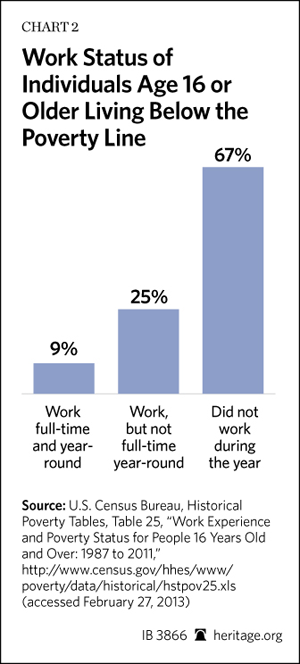
      • 67% in poverty have not worked in last year
      • As James Sherk writes, wages are not the primary barrier to higher incomes, obtaining employment is. 67% of individuals living below the poverty line did not work during the last year.
      • Does not account for those who would have earned raises by increasing productivity through experience/training. James Sherk cites an Employment Policies Institute (EPI) study which found 2 out of 3 minimum wage workers received an average raise of 24% within 1 year.
      • Of minor note, I consider minimum wage a subsidized wage. It is an indirect form of public assistance that is paid for by private individuals rather than directly by government expenditures (which are also paid for by they public through taxes).
    • All things considered, I believe minimum wage will lift some out of poverty, but largely at the expense of the least productive workers being replaced/not hired and higher prices placing an added burden on all, especially low and middle income households. With cost of living rising, more people will find themselves in poverty rather than out of poverty. A trend supported by the subsequent increases in both public assistance program expenditures and the poverty rate in those years following a minimum wage increase.


    4. Reduces gender and income inequality
    • I am for equal compensation across all demographics (Minimum Wage Part I). I find implementing policies on the basis it favors certain demographics more than others a slippery slope. I believe the means to accomplishing the end of reduced gender and income inequality do matter. Attempting to cater public policy to favor certain demographics over others may reduce quantitative inequality, however I fear it may be detrimental. Rather than giving equal treatment to all, it attempts to favor disadvantaged groups perpetuating the cycle of favoritism.
      • While I oppose prospective favoritism to rectify past injustices, I do support retrospective litigation to compensate workers who experienced past injustices.
    • In addition, if gender and income inequality exists because of differences in productivity, the least productive workers will find it increasingly more difficult to obtain employment in a world of automation, outsourcing, consumer effort (self-checkout lines), and labor-labor substitution. Thus, minimum wage legislation may actually worsen inequality by enacting a policy that is prohibitive of the lowest productive workers to acquiring employment. Referring again back to James Sherk, 67% of workers living in poverty have not worked in the last year. Thus, employment is a bigger problem than wages.


    5. Morally just
    • Workers should be paid fair wages and not unjustly employed. However, I believe this should ideally come from generosity, not forced payments (see Private Charities).
    • We should desire to care and meet one another’s needs, however I believe this is more effectively and efficiently accomplished by individuals and private charities rather than impersonal public assistance programs.
    • I am unconvinced you can force morals upon people. I believe pandering "good morals" will at best change some outward behavior while producing inward bitterness and resentment.

    $15 Minimum wage signed into law (Seattle, WA)
    Many states and cities have taken action apart from the federal government to raise minimum wage in its jurisdiction. Most notably, Seattle has passed legislation to raise minimum wage to $15. Seventeen months after President Obama proposed a higher minimum wage in his January 2013 State of the Union Address, minimum wage has remained a prominent topic in the news media.

    With a myriad of potential effects, who benefits from minimum wage legislation? My next minimum wage series post will detail who I believe benefits and is harmed by minimum wage. Lastly I will explore viable alternatives to minimum wage and determine which, if any, may more effectively accomplish my original desires.


    Next Post Topic: Book Review

    Thursday, June 5, 2014

    Minimum Wage Part III: American Samoa, The Face of Minimum Wage, and Sound Cited Effects

    Difficulty finding jobs, frustration over income inequality, annoyed with politicians, jobs going overseas, greater automation, increased difficulty maintaining former standard of living. These are all events I observe in American society.
    Cartoon figure pondering answers to questions

    Can minimum wage laws halt, reverse, or eliminate any or all of these? In my study of cited minimum wage effects (Part II), I am left with more questions than answers.

    I need to determine which effects I believe to be sound and those I believe are unsound. After reaching a conclusion on the validity of cited effects, I may compare these effects with my original desires (Part I).

    As Seen on TV - But Wait! There's More!
    But wait there’s more! One of my pet peeves is to offer support or opposition prior to evaluating and providing alternative solutions. For even if minimum wage does not satisfy all my desires, it remains possible it is the best solution compared with plausible alternatives. Thus, only after weighing the pros and cons of viable alternatives will I make a final decision on if, and why, I support or oppose minimum wage legislation.
    • Example

    Disclosure #1: I am considered young, naive, and well educated with an upper middle class income. According to County Health Rankings and Roadmaps, I live in Minnesota's 3rd lowest social and economic county and work in the 2nd lowest.

    Disclosure #2: As stated in Part I, I disagree an individual's value is tied to their income, wealth, or productivity.

    Tldr(too long didn't read)


    Cited effects I believe to be true of minimum wage legislation –

    1. Wages are determined by productivity
      Peyton Manning and Christian Ponder
    • The more productive an individual is, the higher the wage they will attain.
    • Example: Peyton Manning’s $20 million annual salary versus Christian Ponder’s $3.5 million annual salary. Even though both athletes are employed in identical positions, no one would argue Ponder should be paid the same as five time MVP Manning. This is a direct result of productivity. NFL teams will pay more for 5,000 yard, 50 TD seasons than 3000 yard, 15 TD seasons marred by injuries and inconsistency.

    2. Increases consumer prices
    • If you raise production costs (labor), the increased costs must be paid for by consumers via increased prices or investors/owners through decreased profits. For better or worse, prices are more likely to be increased rather than owners/investors taking a pay cut.
      • This effect can seen by comparing the Consumer Price Index (CPI) of years minimum wage was increased to years when it was not. Starting with the minimum wage increase in 1974:
        • CPI increased an average of 6.3% in years minimum wage was increased
        • CPI increased an average of 3.0% in years minimum wage was not increased
    • Additional note


    3. Increases difficulty of less productive workers gaining and retaining employment (possibly leading to unemployment)
    • Laws can demand workers be paid a certain wage. However, to maintain fiscal solvency and remain competitive, employers will choose to not hire, nor retain, employees whose productivity does not cover the cost to employe them. Rather, as Peter Roth writes: 
      • “Unskilled workers get laid off, replaced by machines and higher-skill workers who are more valuable. Self-checkout lines appear in grocery stores. Credit card machines take the place of the fellow who used to take the money in the parking lot.” 

    Case Study: American Samoa and Commonwealth of the Northern Mariana Islands (CNMI)
    Map of American Samoa and Commonwealth of Northern Mariana Islands

    Timeline -
    • 2007: American Samoa’s minimum wage: $3.26/hour
    • 2007: Congress enacts legislation to raise American Samoa’s minimum wage by $0.50/hour  annually until it meets the United States minimum wage ($7.25/hour)
    • 2009, May: Minimum wage has risen to $4.76/hour
    • 2009, 2011: U.S. Congress passes legislation to halt minimum wage increases until September 2015
    • 2011: American Samoa National Emergency Grant 
      • March 2011 unemployment rate: 46.9%!
        • Historic unemployment rate: 7.0%
      • We are now spending public funds to rebuild American Samoa
    • 2011: Government Accountability Office (GAO) report found unemployment increased by 14% and inflation adjusted wages fell 11% between 2006 and 2009
    • 2011: American Samoa Governor Togiola Tulafona testifying before Congress in September 2011 objected that:
      • “this GAO report does not adequately, succinctly or clearly convey the magnitude of the worsening economic disaster in American Samoa that has resulted primarily from the imposition of the 2007 US minimum wage mandate.” 
      • Gov. Tulafona pointed out that American Samoa’s unemployment rate jumped from 5 percent before the last minimum wage hike to over 35 percent in 2009. He begged Congress to stop increasing the islands’ minimum wage: 
        • “We are watching our economy burn down. We know what to do to stop it. We need to bring the aggressive wage costs decreed by the Federal Government under control. But we are ordered not to interfere… Our job market is being torched. Our businesses are being depressed. Our hope for growth has been driven away… Our question is this: How much does our government expect us to suffer, until we have to stand up for our survival?”
      • Samoan employers responded to higher labor costs the way economic theory predicts: by hiring and retaining fewer workers. Congress hurt the very workers it intended to help. Fortunately, Congress heeded the Governor’s plea and suspended the future scheduled minimum wage increases. (Source: James Sherk at the Heritage Foundation)
    2014 GAO Report - Talanei.com Summary
    • Both territories (American Samoa, Commonwealth of the Northern Mariana Islands - CNMI) experienced economic downturns between 2007 and 2009, including the complete exodus of the CNMI’s garment industry and the closure of one of two tuna canneries in American Samoa.
    • 45% increase in unemployment in CNMI for the entire period from 2006 to 2012, with most of the overall decrease occurring from 2006 to 2009 (garmet industry closed)
    • 36% decrease in CNMI's real gross domestic product (GDP) from 2006 to 2012 
    • 4.5% decrease in American Samoa’s real GDP from 2006 to 2012
    • 58% employment loss in American Samoa's tuna canning industry from 2007 to 2013
    • 5% decrease in average inflation-adjusted earnings from 2007 to 2012
      • The inflation-adjusted earnings of minimum wage cannery workers who retained their jobs and work hours also fell by ~5% from 2007 to 2012.
    • CNMI: Over the entire period from 2006 to 2012, average inflation-adjusted earnings fell by about 2 percent, with an about 29 percent increase in average earnings offset by an about 31 percent increase in prices.
    • 2014 GAO Report Conclusion -
      • Both American Samoa and the CNMI have experienced decreases in employment, earnings, and GDP since minimum wage increases began in 2007. 
      • In 2012, about 36 percent of American Samoa’s workforce worked in the government sector and about 12 percent worked for the canneries.
      • CNMI employment dropped every year from 2006 to 2012 (graph on p.73)
      • American Samoa response: (Governor Lolo Moliga)
        • "Undergoing this exercise [GAO Report] every two or three years is meaningless and a waste of resources. A better alternative would be to have American Samoa develop its own minimum wage schedule with appropriate guidance and oversight provided by the US Department of Labor and US Department of Interior."
        • "For reasons stated above, I strongly urge you and US GAO to send a clear and strong message to the Congressional Committees to postpone once more the looming minimum wage increase in 2015. Please bear in mind this federal minimum wage set for 2015 is nothing but a prescription for total economic ruin for the territory of American Samoa."


    4. Inefficiently distributes income to those it is intended to help
    • Given a desire to increase the standard of living of low income earners from the poorest households, I believe James Sherk and Joseph Sabia are correct in stating the minimum wage is an inefficient method of accomplishing this desire.
    • The following numbers assume all of the least productive workers (as measured by income) would retain their positions. An assumption I find unreliable at best, and likely false as seen in American Samoa and CNMI.
    • Sherk – Who earns the minimum wage ($7.25)?
      • Valid numbers, but somewhat misleading as only accounts for those currently earning the minimum wage, not those who would be affected by increasing it. None-the-less, it does provide some insight into who earns low income wages.
      • Only 23% of all workers earning the minimum wage live in poverty while 65% live in households with incomes > 150% of the poverty line
      • More than 50% of minimum wage workers are less than 25 years old. Of these 50%, 62% are currently enrolled in school. Only 22% of these live at or below the poverty line.
      • 67% of individuals living below the poverty line who were > 16 years old did not work in the last year. Thus, more than 2/3rds of those in poverty are unaffected by minimum wage.

    • Sabia - Will a $9.50 Federal Minimum Wage Really Help the Working Poor?
      • 2010 study looking at who would be affected by a minimum wage increase to $9.50/hour. Intriguing study as uses income-to-needs ratio to allow scaling of income to needs based on household size and poverty level.
      • 17.7% of all workers earn between $5.70 and $9.50 and would be affected.
      • Of the 17.7% in line to be affected by a minimum wage increase to $9.50 an hour, only 11.3% of these come from the poorest households (less than the poverty line), with an additional 12.1% of workers coming from households living above the poverty line, but below 150% of the poverty line. 
      • Almost twice as many workers who stand to be affected by a minimum wage increase to $9.50 live in households with incomes more than 3 times the poverty line. (42.3% of minimum wage workers)
      • 1 in 9 workers from households under the poverty line would be affected. Less than 1 in 4 workers earning less than 150% of the poverty line would be affected by minimum wage increase.
      • 4.4% of the general working population comes from households with incomes below the poverty line. A minimum wage increase to $9.50 will only affect 2.0% of the poorest households.
      • Of the 9.5% poorest households in America, minimum wage will affect less than half of these households. (4.1% of the poorest households)
      • As for helping families with children, 26.2% of workers earning minimum wage are the highest earner in their family with children under 18 years old.
      • Refering back to Sherk’s article, one of the primary reasons people live in poor households is not that they are earning minimum wage, rather, it is they do not have work (67% have not worked in the last year).
      • Sabia’s findings provide strong evidence minimum wage is an inefficient tool for helping households below or near the poverty line.
    • Natalie Sabadish at the Economic Policy Institute 
      • 2012 study which is for increasing the minimum wage. Uses similar base data, however data is presented in a way to support minimum wage increase.
      • Boasts minimum wage increase to $9.80 an hour would raise the wages of ~28 million workers (20 million directly, 8 million indirectly)
        • I agree with this, but as Sabia found, only ~3 million of these 28 million come from households living below the poverty line. (11.3%)
      • 23.6% of workers affected by a $9.80 raise live in households that make less than $20,000 while 76.4% of affected workers have higher incomes
        • For ever 1 low income earner, minimum wage is helping 3 higher income workers. Ideally a measure to increase the standard of living of low income households would affect a majority of low income households.
        • Unlike Sabia, does not take into account household size.
      • Cites 28.0% of affected workers live in households with children. This is similar to Sabia’s findings and does not exclude those workers who are not the highest income earners of their household.
      • Boasts it would boost the economy, I find this effect unreliable as I will discuss later.
      • Boasts would disproportionately help women, minorities, and workers of all ages. I would disagree with none of these.
    • An interesting graph highlighting the percent of the population that earns minimum wage (Source: Antony Davies at Mercatus Research)


    5. Reduces individual freedom
    • I am pro-freedom in I believe individuals should be able and encouraged to make self-determined decisions in their own best interest. (exception being when one’s choices infringe upon the rights of others such as murder, theft, etc.) 
    • This includes the voluntary accepting and denying of wage contracts. As Murray Rothbard writes:
      • “This [minimum wage legislation] means, plainly and simply, that a large number of free and voluntary wage contracts are now outlawed…”
    • I acknowledge some freedom must be surrendered to acquire certain securities (Freedom vs. Security Post). Thus, while I believe minimum wage does decrease our individual freedoms, it remains possible it provides needed income security.


    6. Popular proposal across a variety of demographics (democrats and republicans, rich and poor)
    • Minimum wage legislation has a broad base of support across a variety of demographics as highlighted by recent polls:
      • Gallup Poll - 76% of Americans support raising the minimum wage to $9 (Nov. 2013)
      • NELP Poll - 80% of Americans support raising minimum wage to $10.10 (July 2013)
    • Of note, Emily Ekins at reason.com found minimum wage was significantly less popular if it was assumed to cause job losses or raise consumer prices.
      • 67% support increase to $10.10 per hour given no adverse costs
      • Drops to 51% support if caused businesses to raise prices
      • Drops to 39% support if caused businesses to lay off or hire few workers


    7. Decreases our global competitiveness
    • Combining increased prices, reduced freedom, and inability to pay low wages, the United States struggles to compete in the production of low skilled and low cost goods and services. This is readily seen in the outsourcing of manufacturing to China and customer service to India.
    • Whether or not this is a poor outcome remains in question.


    I congratulate you on your perseverance in reading technical jargon and in surviving a metaphorical textbook being through at you. To recap and bring our tldr viewers up to speed, the list below summarizes effects of minimum wage legislation I find sound:
    1. Wages are determined by productivity
      1. Case Study: Peyton Manning and Christian Ponder Salary
    2. Increases consumer prices
      1. CPI Historical Data
    3. Increases difficulty of less productive workers gaining and retaining employment (possibly leading to unemployment)
      1. Case Study: American Samoa and CNMI
    4. Inefficiently distributes income to those it is intended to help
    5. Reduces individual freedom
    6. Popular proposal across a variety of demographics (democrats and republicans, rich and poor)
    7. Decreases our global competitiveness

    There are many effects cited surrounding minimum wage legislation. Which effects do you believe are true? Why and how did you determine the validity of each effect? Personal experience? Logic? Study results? Other’s opinions?

    Minimum wage is complex topic and one size may not fit all (American Samoa and CNMI). In the face of increased unemployment, income equality, difficulty finding jobs, and inability to maintain former standard of living, I believe we can no longer afford to remain ignorant of potential outcomes of minimum wage legislation.


    Next Post Topic: Minimum Wage Part IV: Unsound Cited Effects